Contents
The flying saucer mushroom (Psilocybe azurescens) is a psychedelic mushroom whose main active compounds are psilocybin and psilocin, and a genome study counts it among the Psilocybe “magic mushrooms” known for the psychedelic metabolite psilocin. It is native to Oregon and Washington2, where it fruits from late September until late December and early January. Its other names are blue angel mushroom and azure psilocybin mushroom, and it was described by Stamets and Gartz in 19951.
How to identify flying saucer mushroom
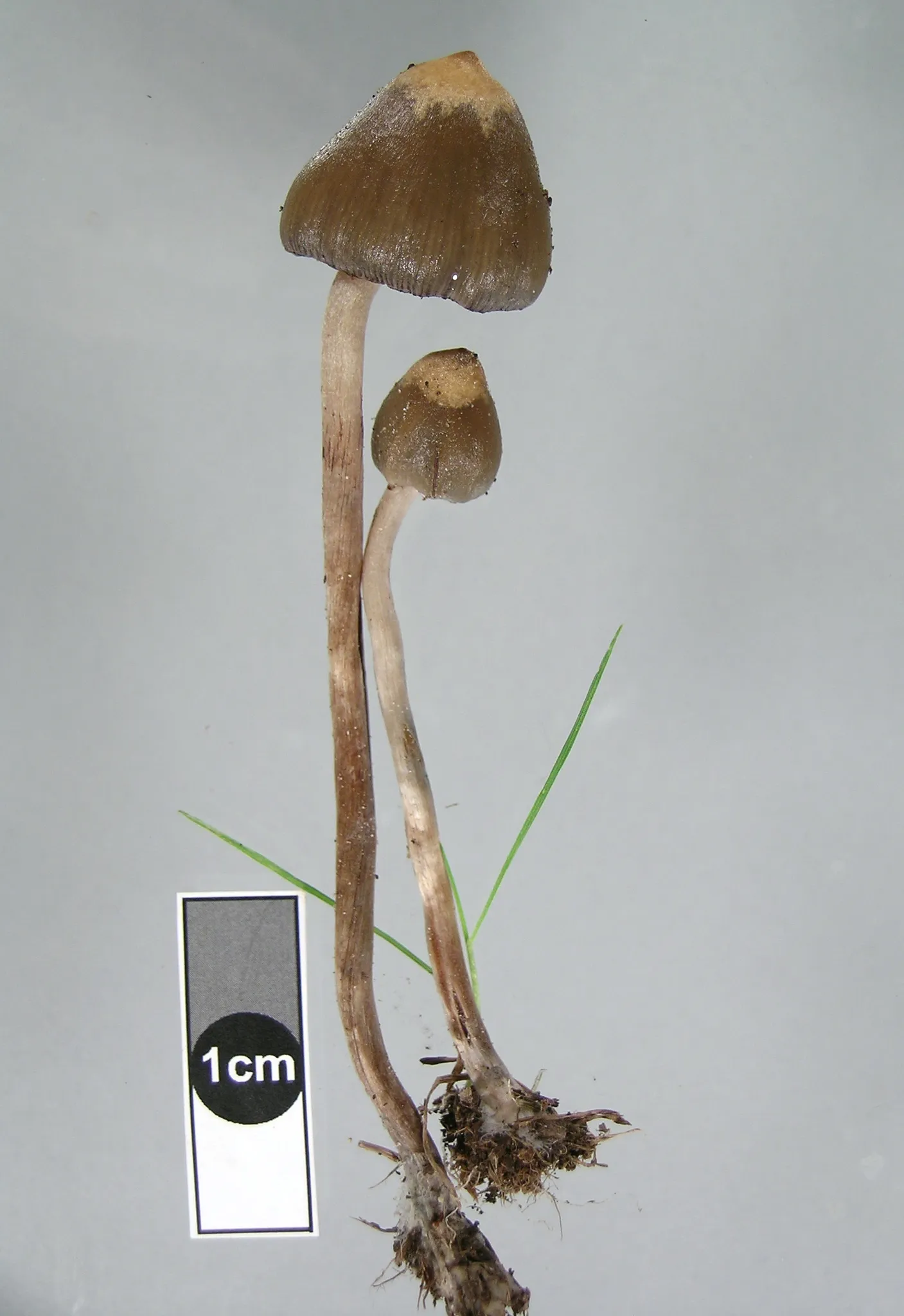
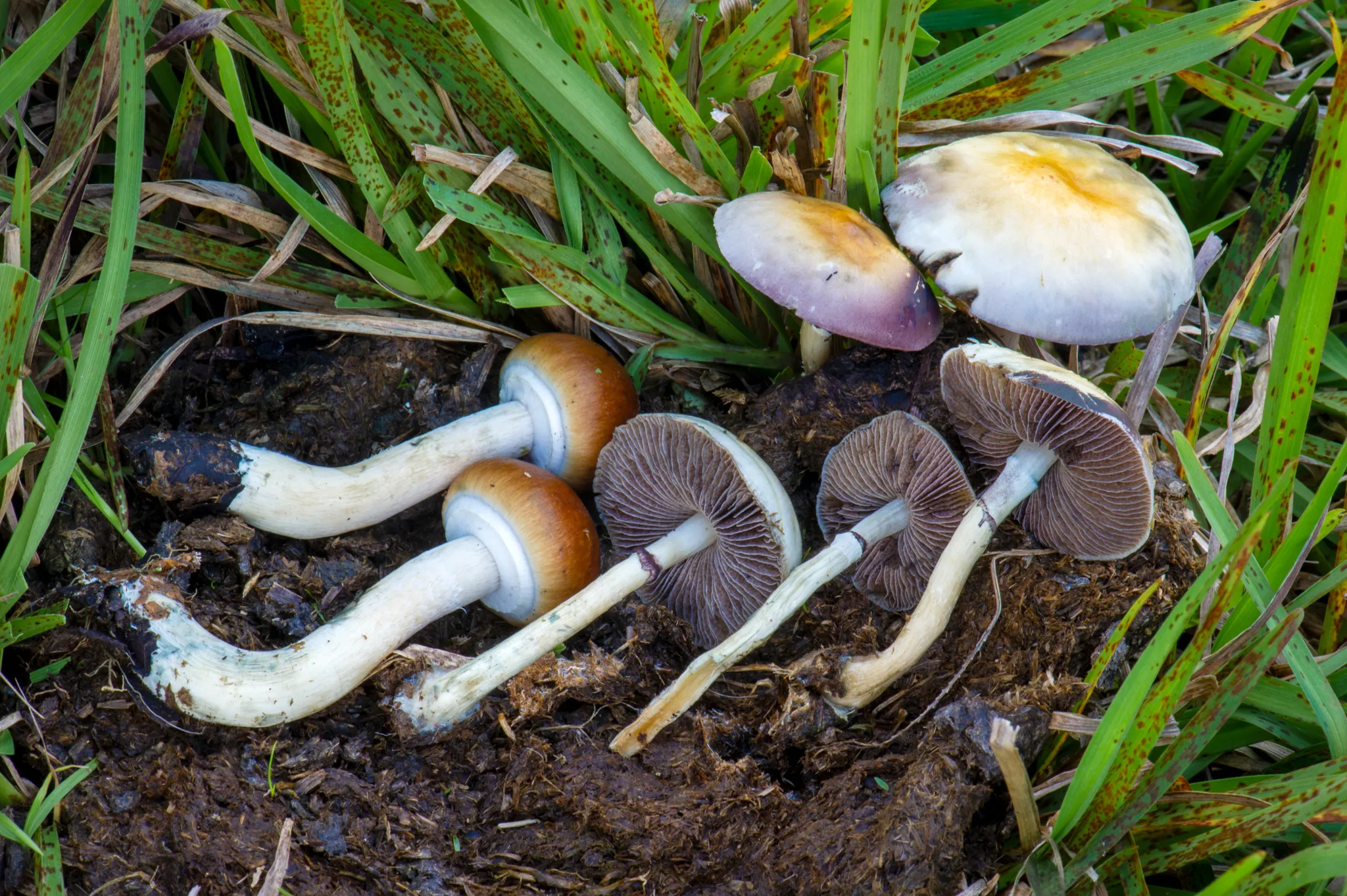
Start with the cap. It is 3 to 10 cm in diameter, conic to convex at first and eventually flattening with age, with a pronounced, persistent broad umbo. The surface is smooth and viscous when moist, covered by a separable gelatinous pellicle. The colour runs from chestnut to ochraceous brown to caramel1, often pitted with dark blue or bluish black zones, and the cap fades to light straw colour in drying and strongly bruises blue when damaged.
Turn it over. The gills have a sinuate to adnate attachment; they are brown and stain black when injured, with whitish edges. The spore print is dark purplish brown to purplish black1.
The stem is 9 to 20 cm long and 3 to 6 mm thick, silky white to dingy brown with age and hollow at maturity. Its base thickens downwards and is often curved, with coarse white tufts of mycelium, often with azure tones, that tenaciously hold the wood-chips together. The cap often leaves a fibrillose annular zone in the upper part of the stem. The smell is odorless to starchy1.
The blue staining is the feature it shares with the wavy cap: a 2022 genome study describes the intense bluing after injury or aging of both species, a reaction that causes psilocin to oligomerize2.
Is flying saucer mushroom edible or poisonous?
It is a psychoactive species, among the most potent of the tryptamine-bearing mushrooms, with up to 1.8% psilocybin, 0.5% psilocin and 0.4% baeocystin by dry weight. Psilocybin concentration decreases with age1. The genome study picked it because it shows a high psilocybin content, and found that it encodes the complete genetic locus for psilocybin biosynthesis2, where an earlier report had found only an incomplete one.
A form of temporary paralysis or weakness called wood lover’s paralysis has been reported anecdotally1 after people ate this mushroom. The genome study describes those reports as numbness, lost control of limbs or facial muscles or even severe paralysis, most often after P. cyanescens and P. azurescens. These effects reportedly last up to 24 h, longer than psilocin’s action on the central nervous system, which typically subsides after 3–4 h. Systematic clinical investigations of the paralysis had not been carried out by 2022, and the authors note that the symptoms may point to undiscovered natural products2 that interfere with peripheral nerves.
The law differs by place. Possession and/or cultivation is illegal in a number of countries, including the United States under federal law. Colorado and cities such as Seattle, Oakland, Santa Cruz and Ann Arbor have passed policies that effectively decriminalize personal amounts of psilocybin mushrooms. In New Zealand it is considered a Class A drug1. Never eat a wild mushroom on the strength of a web page or an app: have it identified in person by an expert.
Where and when does flying saucer mushroom grow?
It grows in tight clusters or gregariously on deciduous wood-chips and in sandy soils rich in woody debris, and has an affinity for coastal dune grasses. Like the wavy cap, it prefers lignin-rich material and woody debris2 as a substrate. Its mycelium forms an extensive, dense, and tenacious mat1, and it causes the whitening of wood.
The range is a small area of the West Coast of the United States, from Depoe Bay, Oregon, north to Grays Harbor County, Washington. Its main locations cluster around the Columbia River Delta, and the first type collections came from Hammond, Oregon, near Astoria. Some feral specimens have been reported in Stuttgart, Germany. According to mycologist Paul Stamets, fruiting runs from late September to late December and early January1.
Flying saucer mushroom lookalikes
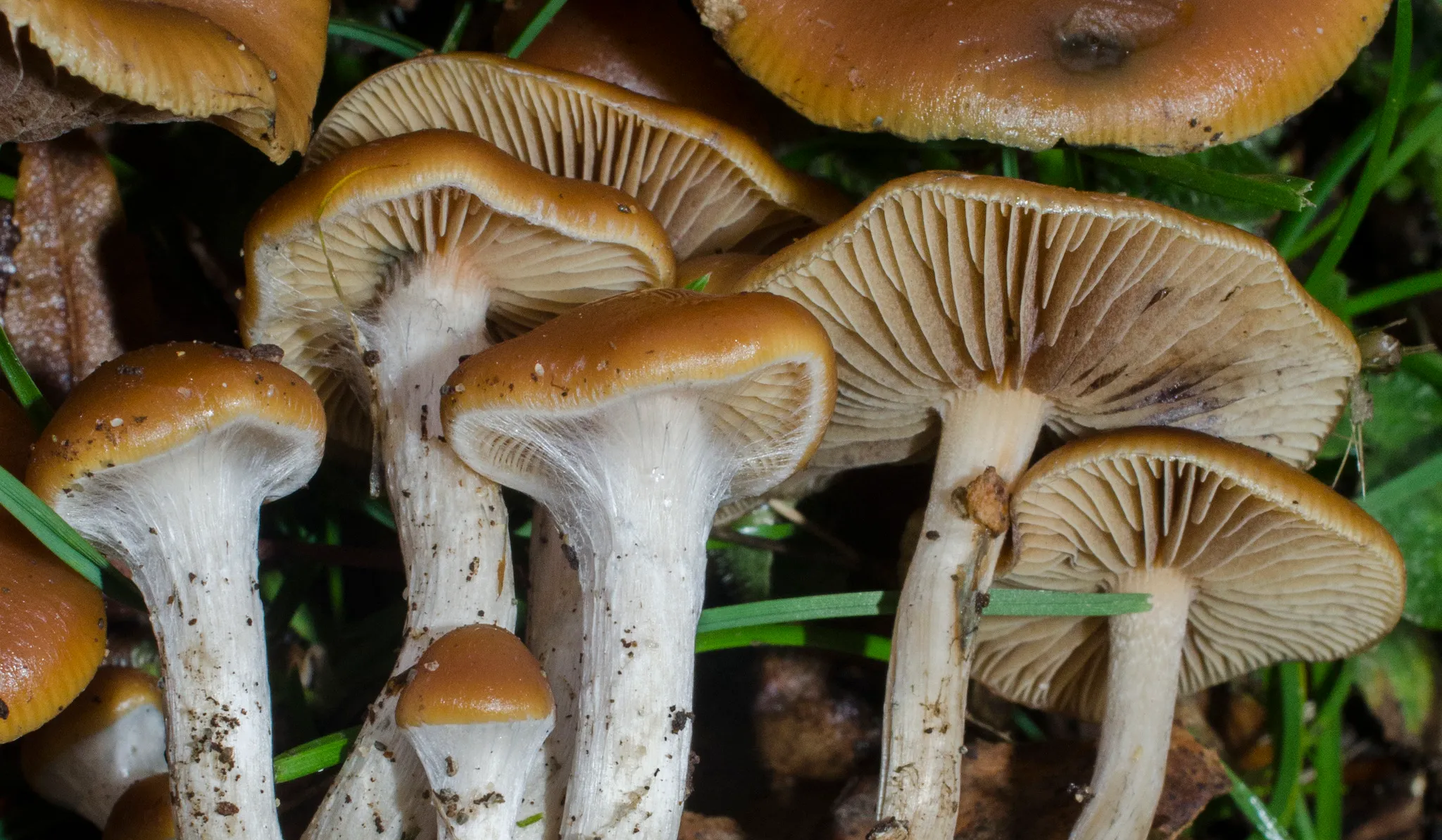
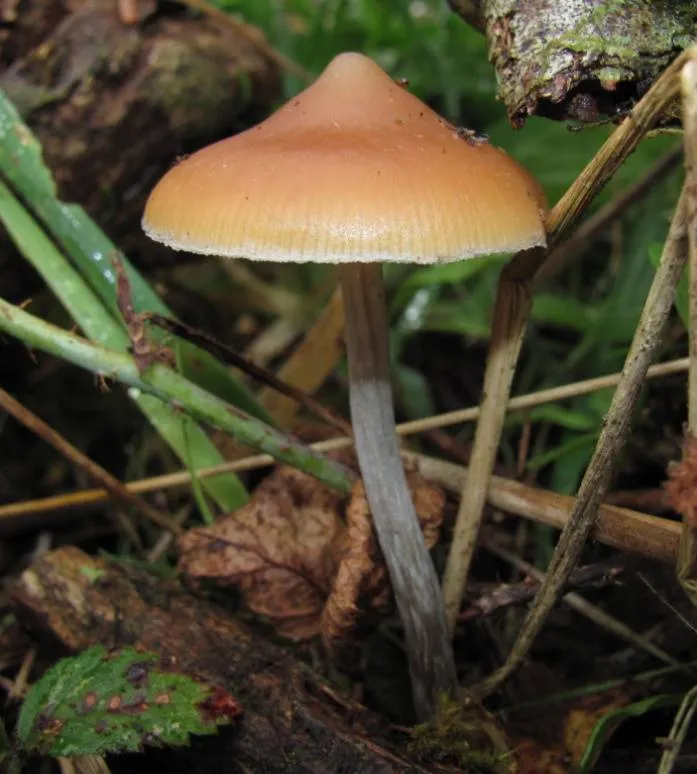
- Wavy cap (Psilocybe cyanescens): also wood-loving and blue-bruising, but widely distributed in North America and Europe, often on plant beds covered with wood chips in residential areas and parks2. Its cap is smaller, from 2 to 5 cm in diameter, against 3 to 10 cm here, with lined margins that usually become wavy at maturity3.
- Funeral bell (Galerina marginata): First Nature calls it deadly poisonous, and it contains deadly amounts of amatoxins4. It also grows on wood, often in clusters, but its spore print is rusty brown, not dark purplish brown. It has a thin ring or ring zone, which may disappear, does not bruise blue3, and its flesh is unchanging when sliced5.
Flying saucer mushroom in research
The 2022 study produced contiguous genomic sequences for P. mexicana and P. azurescens, with a genome size of 71.4 Mb for this species. In P. azurescens and P. cyanescens, the two species that reportedly cause the paralysis, it found three loci for sesquiterpene synthases that the other species studied lack; whether their products may be connected to the paralysis requires further functional characterization2.
A 2022 review of psilocybin-producing fungi in Fungal Biology notes that therapeutic use of psilocybin has become a focus of recent international research, with preliminary data showing promise for treatment-resistant mental health conditions. Its authors also outline recommendations for future mycological research6.