Contents
The green-spored parasol (Chlorophyllum molybdites), also called the green-gill parasol, false parasol, green-spored lepiota and vomiter, is a large lawn mushroom, often in large fairy rings, in summer and fall2. It is poisonous: it causes potentially serious vomiting and diarrhea, and MykoWeb lists it as toxic, causing gastrointestinal upsets. It causes more poisonings in North America than any other mushroom3 and is the most frequently eaten poisonous mushroom1 there.
How to identify the green-spored parasol
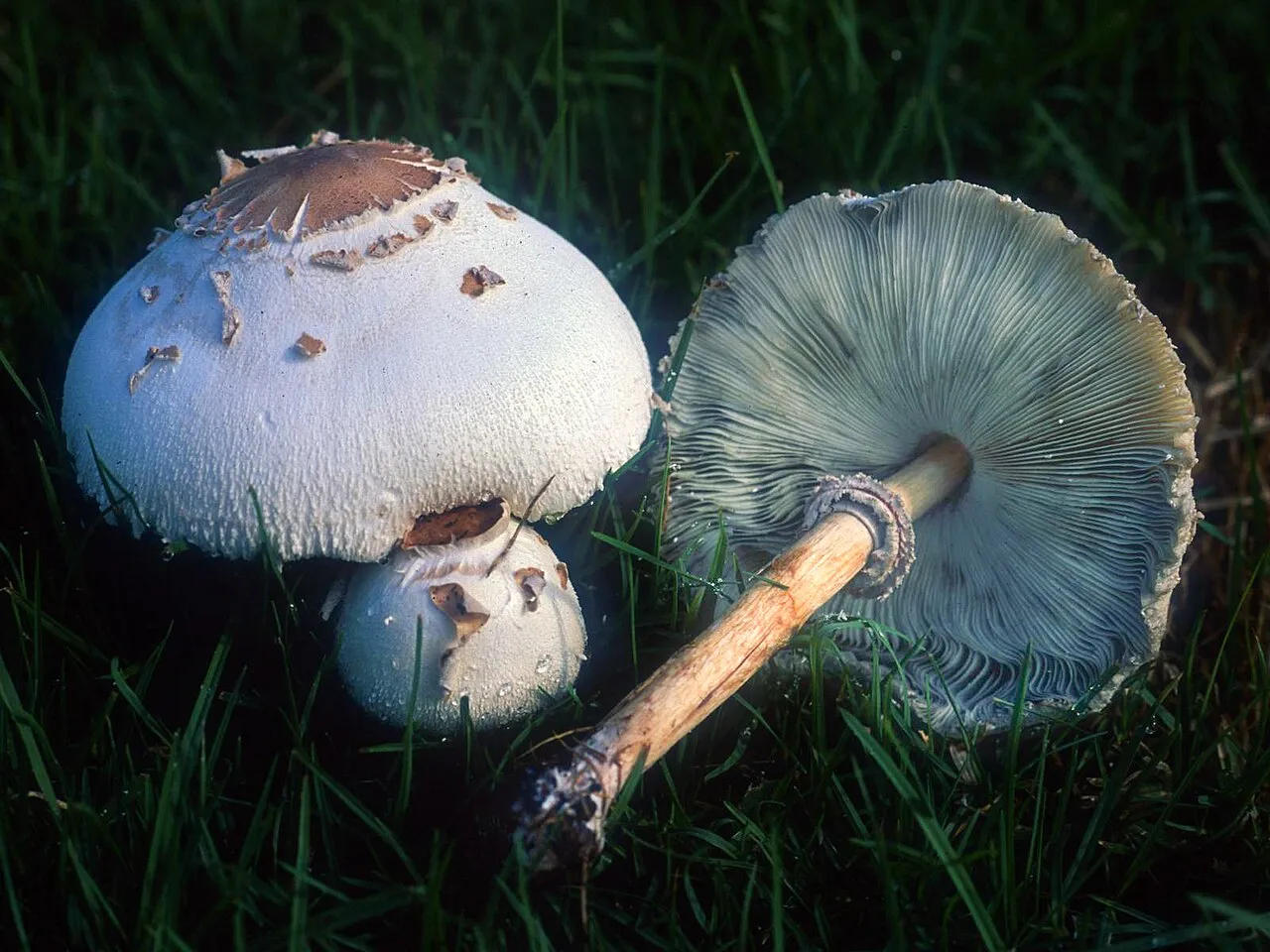
The green-spored parasol is easily identified from mature specimens, which have a distinctive greenish spore print and, in old age, greenish gills; one general reference calls it the only large mushroom with a green spore print1. Young specimens are another matter: they have white gills and can be nearly inseparable2 from the shaggy parasol.
Cap sizes differ between sources: 10 to 22 cm according to MushroomExpert, 5 to 15 cm, occasionally 20, in MykoWeb’s California data3, and 8 to 30 cm according to one general reference1. The cap is convex to spherical when young, becoming broadly convex or nearly flat. It is bald in the button stage but soon carries brown to pinkish brown or tan scales concentrated near the center, over a whitish to pale tan surface2.
The gills are free from the stem or slightly attached to it, and crowded. They are white when young, becoming grayish green to brownish green as the spores mature2; MykoWeb describes them as cream-colored, in age buff-brown to greyish-olive3.
The stem is 8 to 20 cm long and 1.5 to 3 cm thick according to MushroomExpert, or 5 to 30 cm tall according to one general reference, and slightly enlarged toward the base. It bears a persisting, whitish ring with a greenish to brownish lower edge2, described elsewhere as double-edged. The stem lacks the snakeskin pattern generally present on the parasol mushroom1.
The flesh is white throughout and thick; it does not stain when sliced, or stains reddish brown to pale pinkish red in the base. Its odor and taste are not distinctive. MushroomExpert gives the spore print as dull grayish green, MykoWeb as dull-olive to ochraceous. Under the microscope the spores measure 9 to 13 by 6 to 9 µm according to MushroomExpert2 and 9.0 to 11.5 by 6.5 to 8.0 µm according to MykoWeb3.
Is the green-spored parasol edible or poisonous?
The green-spored parasol is poisonous1, and MykoWeb rates it toxic3.
The symptoms are likely caused by the compound molybdophyllysin, a toxic protein isolated from the species4 by following its lethal effect in mice. They are predominantly gastrointestinal, with vomiting, diarrhea and abdominal pains, often severe, the gastrointestinal upsets3 MykoWeb also lists, occurring 1 to 3 hours after eating. In 1974, Eilers and Nelson found a high molecular weight protein with an adverse effect when injected into laboratory animals1. Never eat a wild mushroom on the strength of a web page or an app: have it identified in person by an expert.
Where and when does the green-spored parasol grow?
The green-spored parasol is saprobic. It grows alone, scattered, or gregariously in lawns and meadows, often in troops or fairy rings2. MykoWeb finds it primarily in grass, occasionally in parks and gardens3, and because it often forms fairy rings it is sometimes called fairy ring mushroom1.
In North America it is widely distributed, but more common from the Great Plains eastward2. In California it is common in the Central Valley and Southern California, rare in northern California coastal areas3. Beyond that continent it grows in temperate and subtropical regions around the world, and it appears to have spread, with reports from Scotland, Australia and Cyprus1.
The season runs summer through fall2; fruiting bodies generally appear after summer and autumn rains1. In California it fruits during the summer months3.
Green-spored parasol lookalikes
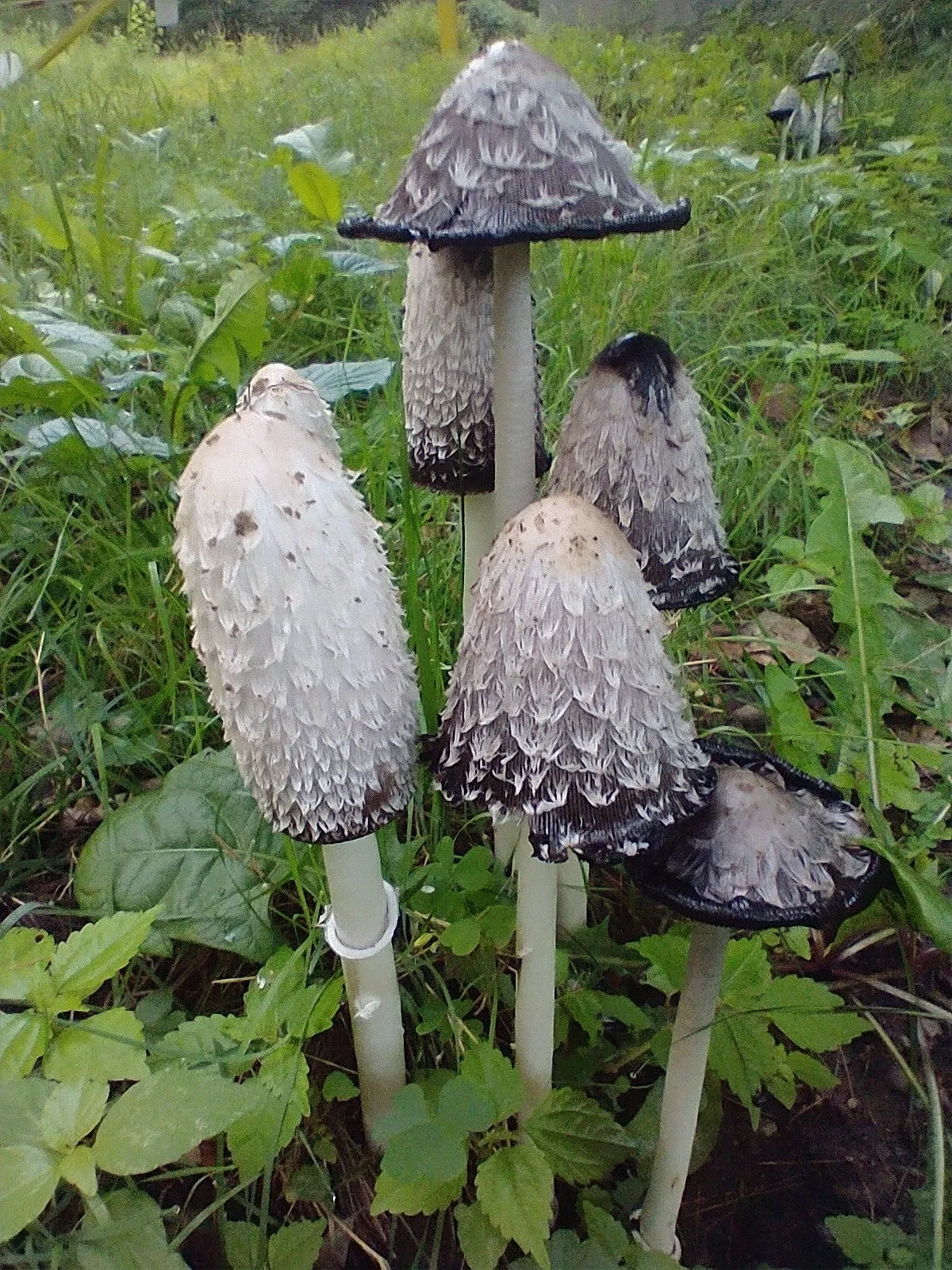
It is often mistaken for the shaggy parasol and the parasol mushroom. In Malaysia it is often mistaken for local Termitomyces mushrooms, and it might also be confused1 with the shaggy ink cap (Coprinus comatus).
- Parasol mushroom (Macrolepiota procera): listed among the edible species1 it is often mistaken for, and called a choice edible by First Nature, the parasol has a white spore print, not green. Its stem shows small brown scales that often give it a banded, snakeskin appearance5, a pattern the green-spored parasol’s stem lacks. The mature cap has a little bump in the center, and it grows alone or scattered in late summer, in woods or at their edges, or in pastures6.
- Shaggy parasol (Chlorophyllum rhacodes): the hardest to separate, since young green-spored parasols can be nearly inseparable from the very similar Chlorophyllum rhacodes2. Mature ones are easily separated by the greenish gills and spore print; the shaggy parasol has a white spore print, and its flesh turns pinkish orange to reddish when sliced, especially near the apex of the stem7.
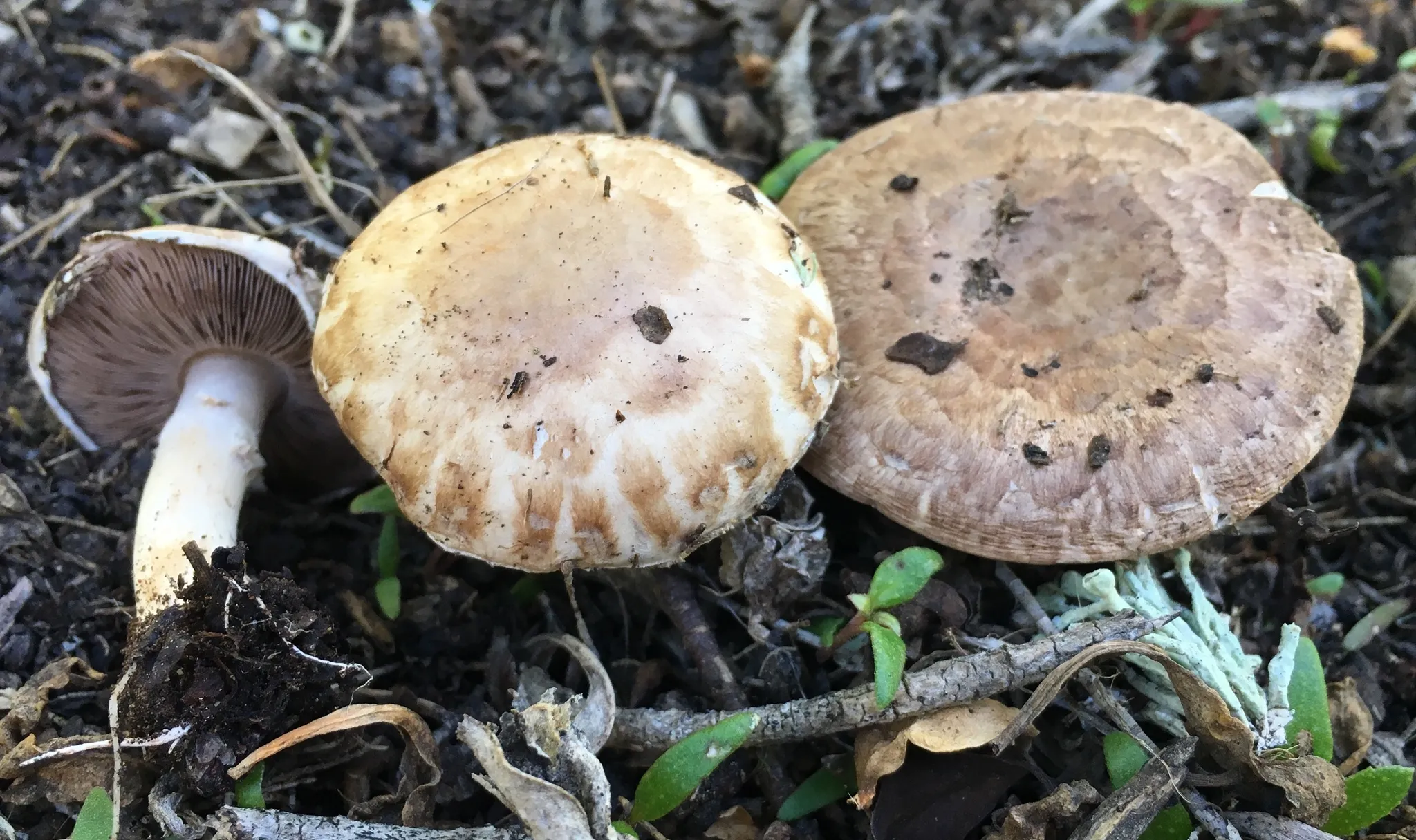
- Chlorophyllum brunneum: in California the green-spored parasol is a look-alike of Chlorophyllum brunneum. MykoWeb separates the green-spored parasol by a less scaly cap, softer cap flesh at maturity, a sub-bulbous, not abruptly bulbous, stem base and greyish-olive gills in age. Habitat helps too: the green-spored parasol prefers warmer, inland locations and grass, while C. brunneum predominates in coastal areas, in cypress or eucalyptus duff or near compost heaps3.
- Amanita thiersii: in many areas east of the Rocky Mountains it also makes fairy rings and grows in troops in lawns. Up close it has a shaggy stem to go with its shaggy cap, and gills that are white at maturity2; it is covered from head to toe with shaggy, sticky universal veil material and drops a white spore print8.
Green-spored parasol in history, food and medicine
The species’ author citation is (G. Meyer, 1818) Massee, 18982, and earlier names include Agaricus molybdites, Lepiota molybdites and Lepiota morgani1. The genus is named after it: Chlorophyllum means ‘with green gills’, a reference to Chlorophyllum molybdites, while other species in the genus have white spores9.